


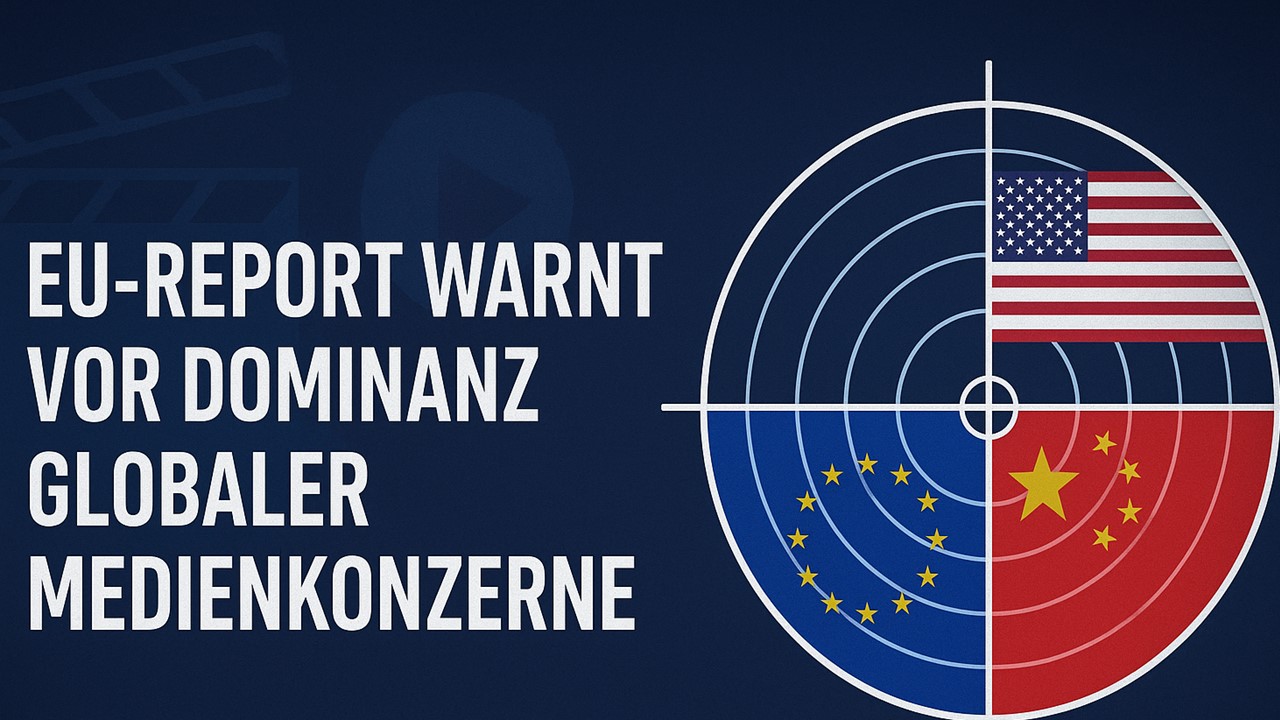
In its current European Media Industry Outlook revealed alarming developments: Global media groups from the USA and China are securing ever larger shares of the European market - and are increasingly squeezing out domestic providers.
US players control distribution and consumption
The report shows clear imbalances in the audiovisual sector in particular. Although European productions account for around 20 % of the content on streaming platforms, they are far less popular with audiences: US content accounts for 61 % of viewing time. The dependence on Hollywood also remains high in cinemas: two thirds of all tickets are sold for US films, while European productions only account for just under a third.
What's more, the major distribution channels - YouTube, Netflix, Disney+, Amazon Prime and others - are almost exclusively in non-European hands. They not only determine what is shown, but also skim off the lion's share of the revenue.
Rapidly shifting market shares
A look at the 100 media companies with the highest revenues in Europe illustrates the shift in power: US groups such as Comcast, Disney, Netflix and Google now account for around 40 % of revenues. In the same period, the share of European companies has fallen from 67 % (2016) to just 59 % (2023) - a trend that is continuing to intensify.
Cultural and economic risks
The EU warns of the consequences of this development:
Economic dependence - Profits and data flows are increasingly being channelled abroad.
Cultural displacement - European stories and voices are losing visibility.
Endangered diversity - creative freedom and journalistic independence are coming under pressure.
The dominance of global platforms could threaten the existence of news media in particular, which are already weakened by shrinking advertising revenues.
EU calls for a change of course
With the report, the Commission is sending a clear signal: Europe urgently needs to invest in its own structures - from the promotion of European streaming offerings to a stronger legal framework that ensures diversity and fair competitive conditions.
The message is clear: without a strategic strengthening of its own media landscape, Europe risks becoming a mere consumer of foreign content - with all the cultural and economic consequences.