

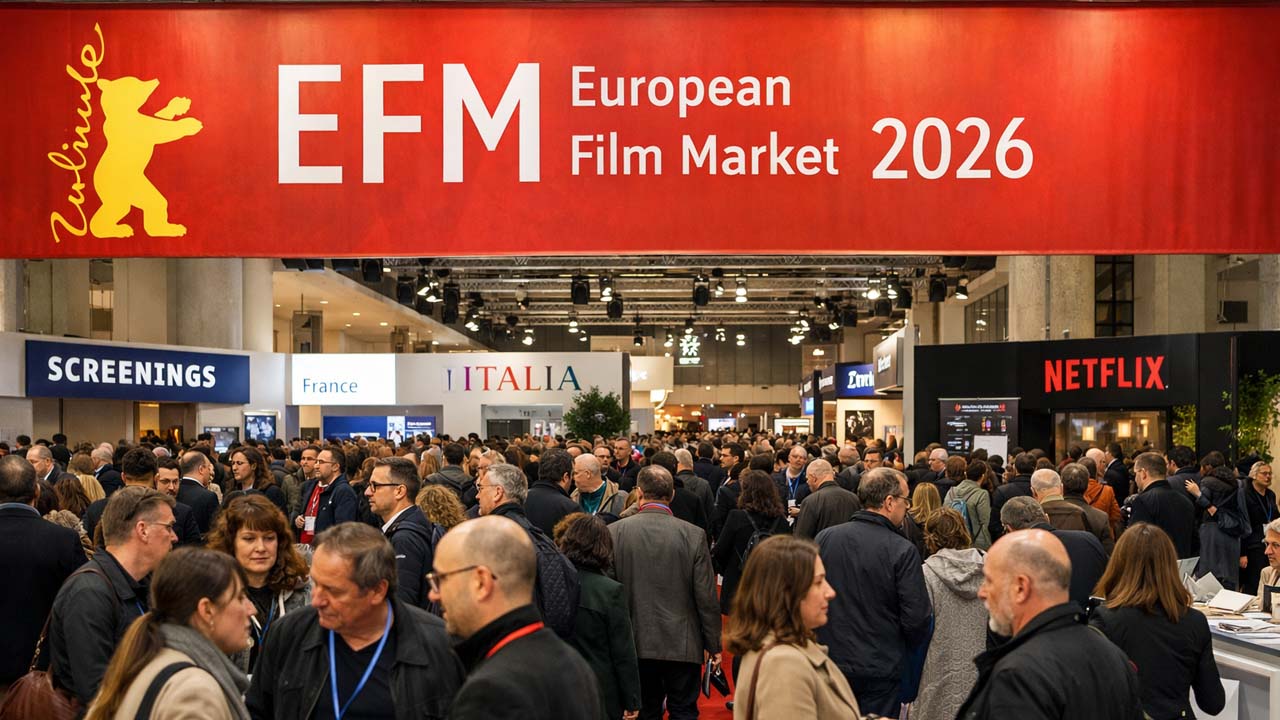
More visitors, fewer deals: The European Film Market 2026 shows that Berlin continues to act as the hub of the industry - while contract signings are increasingly being postponed to the following weeks.
The European Film Market (EFM)from 12 to 18 February as part of the 76th Berlinale once again showed that it continues to be of great importance as a central industry platform throughout the year. According to official figures, over 12,000 professionals from the film and audiovisual industry attended the industry event in Berlin, with a broad programme of screenings, panels and networking formats, which was also significantly expanded compared to the previous year.
Despite this increased interest, however, the number of contracts actually concluded during the market event remained relatively modest. Although there were numerous discussions and negotiations, they often did not lead to binding agreements immediately. Instead, many projects developed into discussion and evaluation phases that are likely to continue beyond Berlin. This reflects a structural change in the international sales and acquisition cycle: Berlin is increasingly serving as the starting point for negotiations that are only finalised in the weeks and months that follow.
An outstanding example of the rather sparse number of larger deals was the worldwide acquisition of the film "Skeletons"with actress Brie Larson, by Sony Pictures in a reported amount of around USD 25 million. While this deal demonstrates that capital is still available for clearly positioned, genre-orientated projects, it also shows that comparable transactions of this size were rare.
A changing market
The organisers and market participants described a trend towards longer negotiation and decision-making processes, which is likely to have several causes:
Buyers are increasingly demanding more comprehensive materials and data for market and target group analyses.
Financing structures are becoming more complex, often involving several partners and public funding components.
Strategies for window planning, licensing and platform negotiations are gaining in economic importance.
In practice, this means that Berlin will primarily function as a place to initiate discussions and strategic positioning, while the actual contracts will increasingly be concluded at subsequent events such as the markets in Cannes, Toronto or Los Angeles.
Structural challenges
In addition to the deals, structural factors are also influencing the market climate. For example, with Wild Bunch France a formerly important independent European sales partner in a monitoring-related insolvency process, which emphasises the difficult situation for medium-sized providers. The combination of declining audience figures in individual territories, strong competitive pressure from integrated media groups and rising costs is exacerbating the situation for independent buyers.
Industry observers are also seeing an increasing fragmentation of the audience, particularly among younger viewers who have developed diverse digital consumption habits. Films that reach both arthouse and commercial target groups remain rare, further dampening the willingness of acquirers to take risks.
Conclusion
EFM 2026 confirmed its role as a central meeting point and driving force in the international film market - but in an environment in which deal cycles have become longer and more selective. While the number of participants and the variety of activities grew, the number of directly concluded commercial deals remained limited. The market is increasingly acting as a platform for initiating discussions and for strategic orientation, the results of which are only likely to become visible later in the year.